

The problem
HR data sits in a separate HRIS while projects and sales run elsewhere. Headcount context is missing on delivery records.
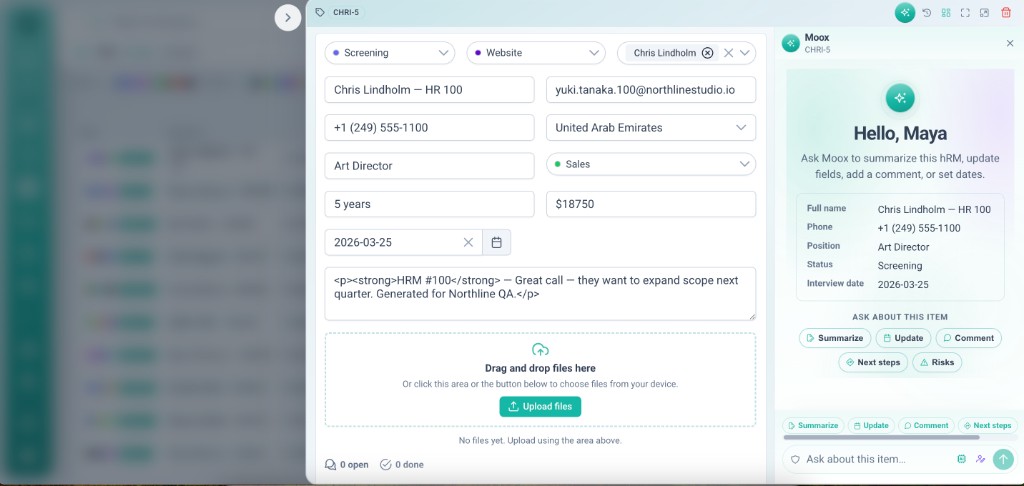
Employee and people records with the same table, board, and integration rails as Leads — for HR, staffing, and internal directories.
HR data sits in a separate HRIS while projects and sales run elsewhere. Headcount context is missing on delivery records.
HRM is a Default App for people records. Install from the catalog, customize fields, and use comments, files, and review on each employee row.
Deep capabilities teams use from day one — not a lightweight add-on.
Structured rows for employees and contractors.
Adapt to your HR process after install.
Files for contracts; review for feedback cycles.
Limit HR data to authorized roles.
Internal lookup for teams and departments.
Dynamic records app — no separate codebase.
People data inside the workspace — not another login.
Default catalog records app — live today.
Install HRM from Default Apps.
Apps hub → Default Apps.
Create rows with your field set.
Contracts and docs on the row.
User app roles gate who sees HRM.
Real scenarios where teams run this feature every week.
Employee records beside projects and tasks.
Candidate and placement tracking with custom fields.
Who does what — linked to workspace membership.
Employee and people records with the same table, board, and integration rails as Leads — for HR, staffing, and internal directories.